
By Architaa Samanta and Kushishree Suresh
When audiences watch a ballet, it’s easy to be swept away by the dancing, costumes, and music. Behind every performance are countless details that quietly build the world on stage. For A Tale of Dreams and Destinies, that world was filled with bustling marketplaces, royal palaces, ancient artefacts, and dozens of handcrafted props.
We sat down with Harsh Ghoshal, Events Associate at The Lewis Foundation of Classical Ballet, to learn about the creative process behind making the props for this year’s production.
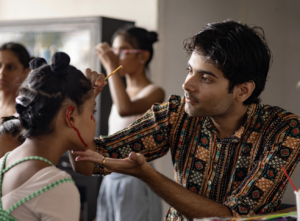
Harsh, TLFCB’s Events Associate, during the Summer Program 2026.
Q: Hi Harsh, let’s begin! First off, how did you get into making props?
Harsh: Hello. Thanks for having me.
I already had experience making props because I studied theatre in college. I worked on the sets and props team for a lot of plays. When I joined, we had just started preparing for Madame Mystique’s Marvellous Machine, and I was told pretty early on that I’d be in charge of props and accessories.
Q: What was your process for making the props?
Harsh: It’s a very collaborative process, we would have meetings where
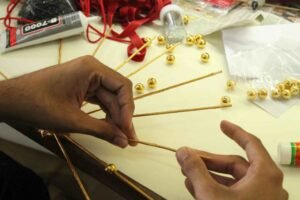
Harsh prototyping for an accessory for dancers playing ‘Gold’
they explained what they wanted, and because A Tale of Dreams and Destinies is based on a familiar story, I also pitched ideas for props I thought we might need. After the ideas were approved, I created Pinterest boards and collected references from Google before presenting different design options. Once a design was selected, I made a prototype. If that was approved, we moved on to budgeting, buying materials, and production.
For accessories, it’s always best to wait until the costume design is ready because the fabrics, stones and embellishments can all be matched to create one complete look.
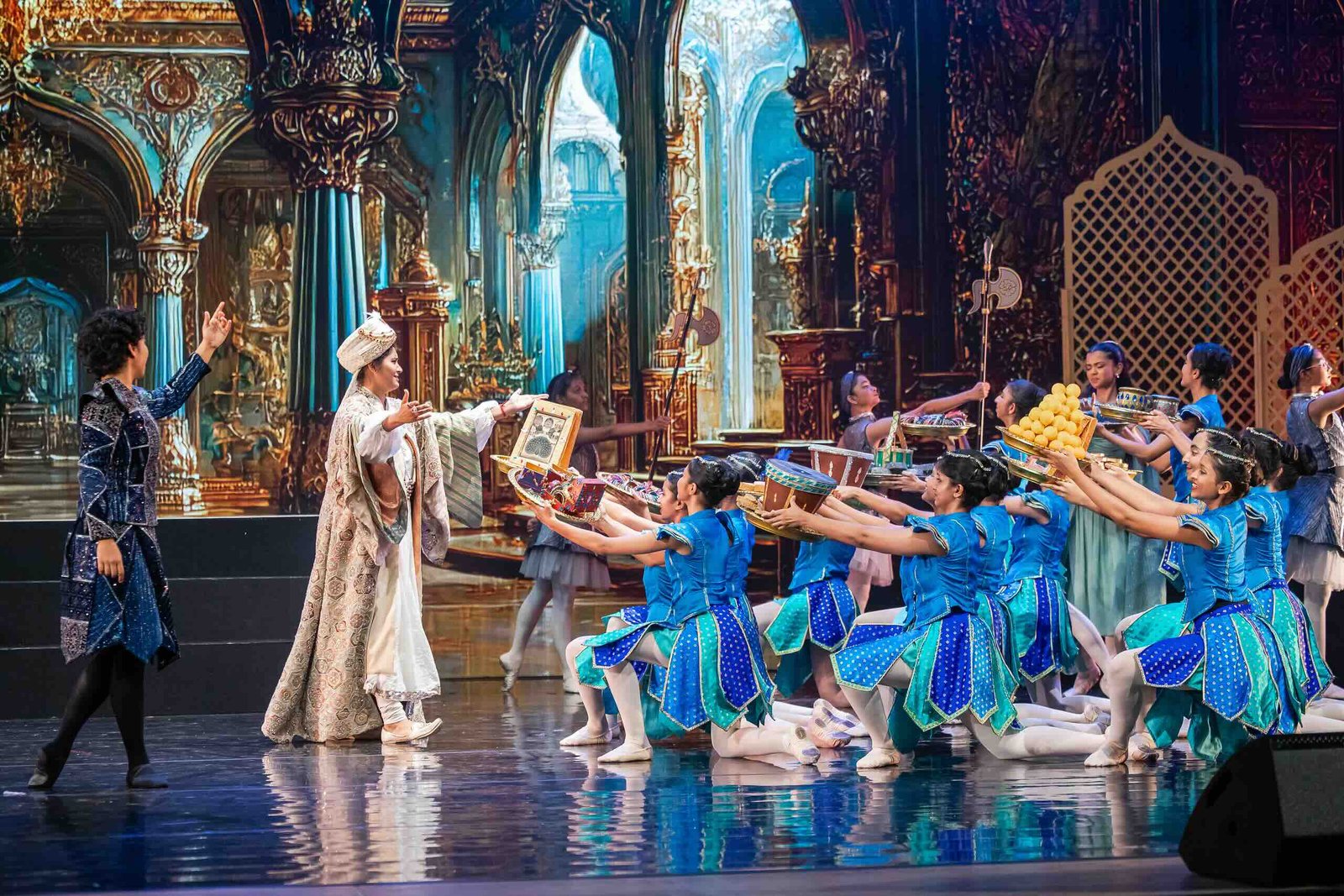
A snapshot from A Tale of Dreams and Destinies
Q: Which was the most challenging prop to make?
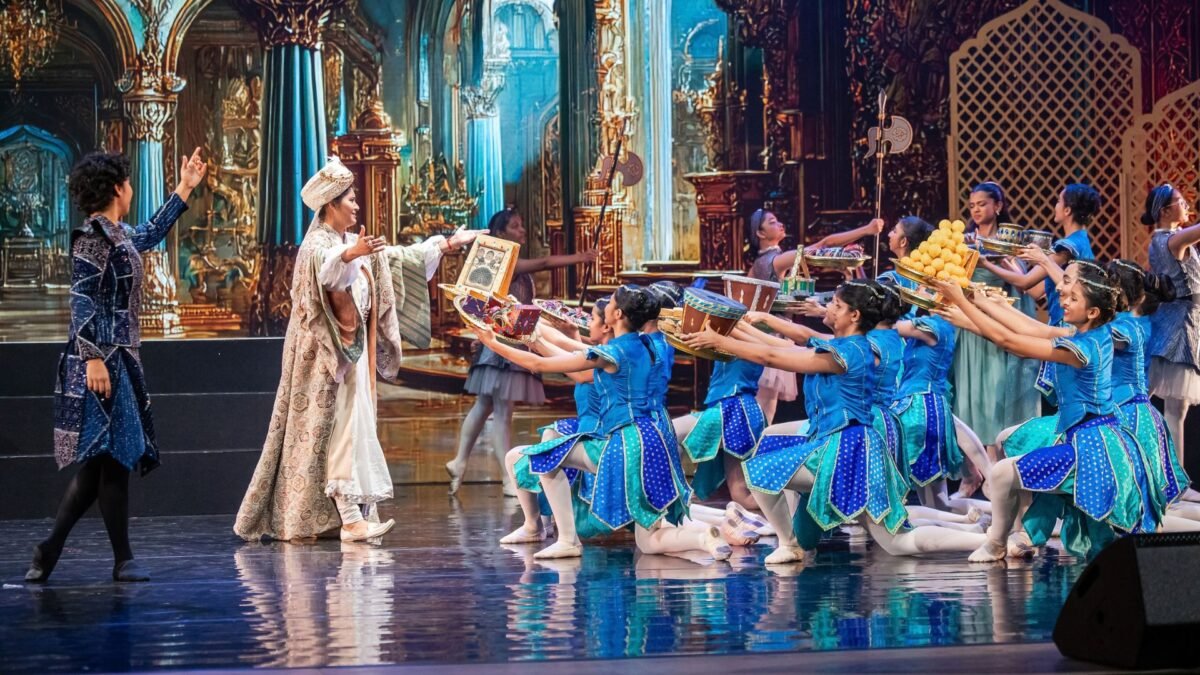
Harsh: Definitely the trays. We made around thirty-one trays, and none of them could look the same. Some had sweets, others had weapons or coins, and every tray needed dozens of handmade pieces. One laddoo tray alone needed around fifty laddoos. It took months, and everyone in the office helped make the individual pieces while I stayed back assembling everything.
Q: Which prop was your favourite?
Harsh: The pottery for the marketplace! I love history, so researching ancient Indian pottery and Mughal-inspired designs was really enjoyable. We even repurposed some old pots from Alice, whic
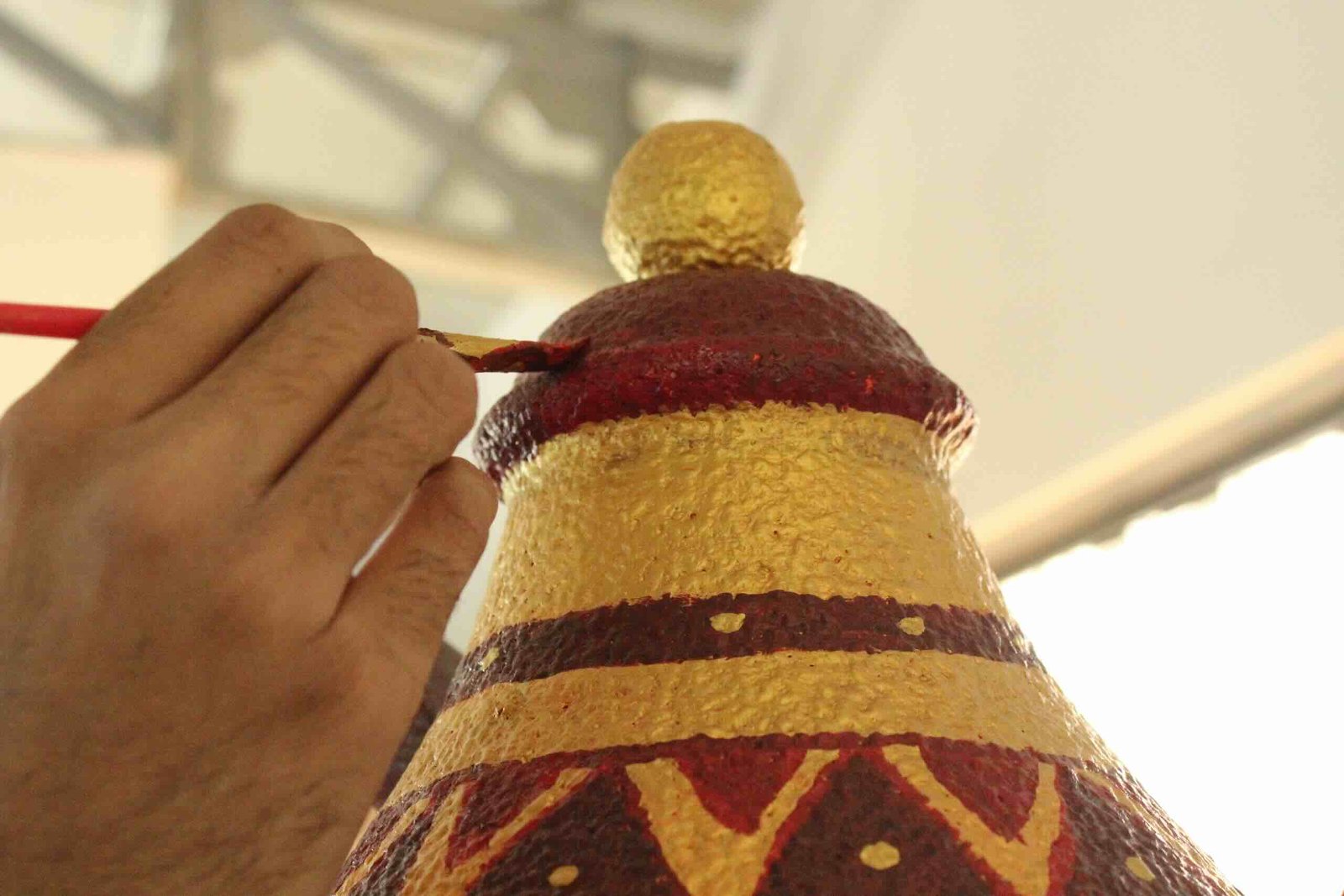
Harsh painting pottery
h was nice. Those were the props I wanted to paint myself because I really enjoyed working on them.
Q: Was there any scene you felt especially connected to?
Harsh: Definitely the marketplace. It was the first scene I worked on and it took about a month to complete. I pitched a lot of ideas during discussions with Miss Yana, like fruit baskets, flower stalls and sweets. Seeing that scene come together on stage with the costumes made me really happy because it looked colourful and alive.
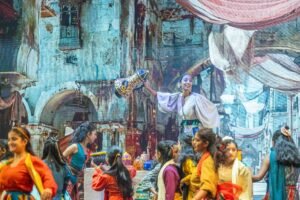
A snippet of the marketplace in A Tale of Dreams and Destinies
Q: How long did everything take?
Harsh: A really long time. The marketplace alone took over a month. Later everyone started helping more, which made things much faster. Miss Elina made all of the tiaras while I mainly sourced materials and helped with the Silver and Gold tiaras. It really was a team effort.
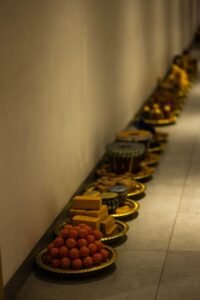
Trays lined up backstage at PCPA
Q: How was this production different from Madame Mystique’s Marvellous Machine?
Harsh: This show had a much stronger cultural context, so I spent a lot more time researching how objects would have looked in ancient India. I also felt much more comfortable presenting my own ideas this time instead of simply executing someone else’s designs.
Q: What was sourcing materials like?
Harsh: Commercial Street became my second home. Walking through those shops gave me so many ideas. I found beautiful ornate trays that were cheaper than the plain ones I’d planned to paint. I also visited Old Market Road constantly for lace, beads and gemstones. By the end, some shopkeepers even recognised me.
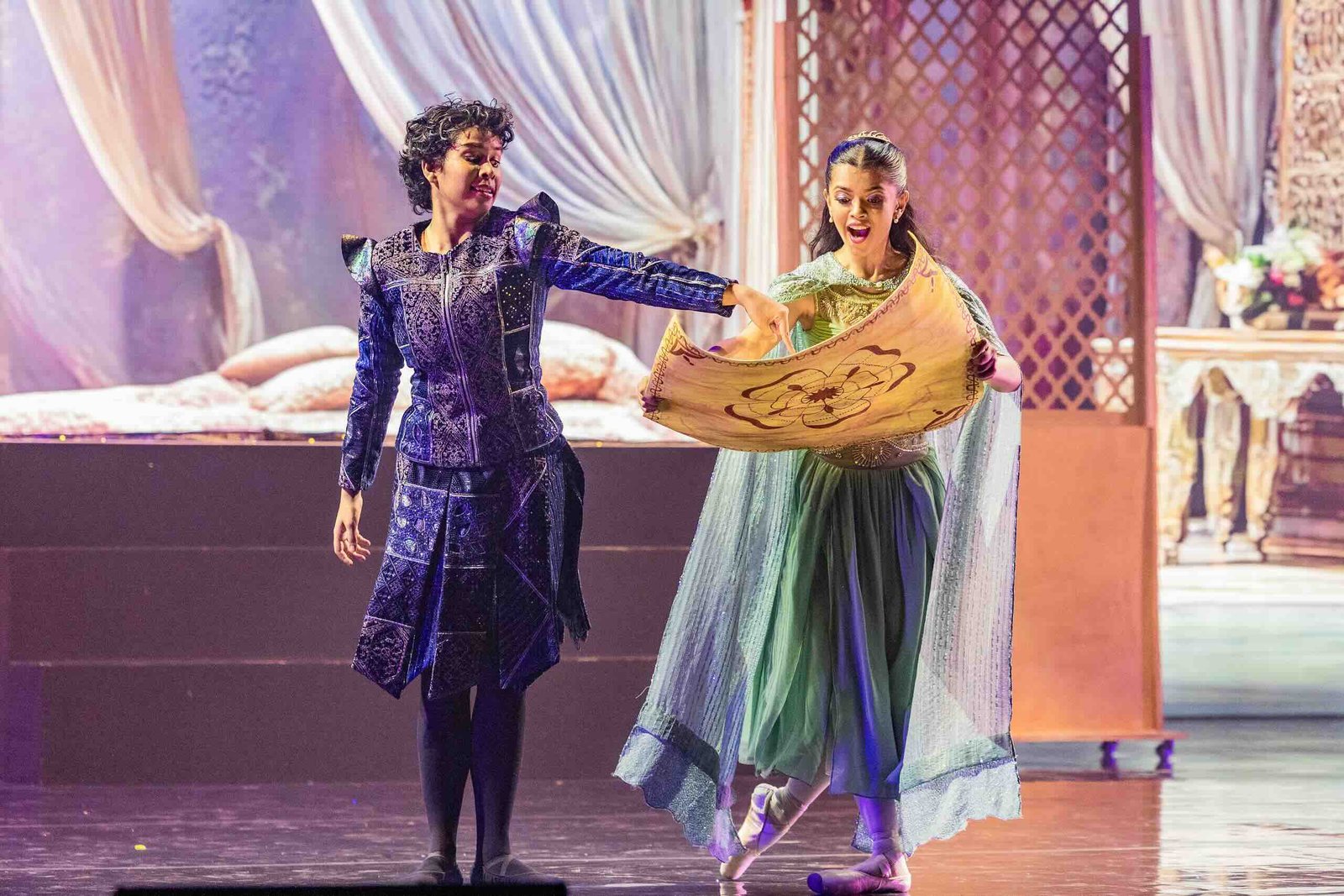
Map with the flower symbol held by Princess Ziva (Played by Krita Yernool)
Q: Is there anything you wish audiences noticed?
Harsh: I came up with a flower symbol to represent the Maharaja because he’s such a peaceful ruler. That flower appears on the map, the scroll, the guards’ spears and even the Maharaja’s shoes. Most people probably didn’t notice it, but I loved having that small detail connect different parts of the production.
Q: How do you deal with feedback?
Harsh: I trust the teachers’ vision because they’re seeing the choreography, costumes, lights and props together while I’m only looking at one part. If they ask me to change something, I just do it because once everything comes together, their choices make complete sense.
Q: Was there any prop you wanted to make but didn’t?
Harsh: We had planned canopies for the marketplace, but they were cancelled on show day because they were too heavy for students to move safely. I also jokingly wanted Princess Ziva to carry a dagger because I think princesses with daggers are cool, but it didn’t suit the story, so we dropped the idea.
Behind every detail
From months of research and sourcing materials to countless hours of crafting and assembling, Harsh’s work played a key role in bringing A Tale of Dreams and Destinies to life. His passion for storytelling through props, attention to detail, and willingness to keep learning are what made each piece more than just a stage accessory—they became part of the world the audience experienced.


Leave a Reply