
By Aakanksha Mukherjee
The Past of Pointe Shoes
Have you ever wondered how, in Swan Lake, Odette seems to be flying across the stage as though she truly were a swan with wings, gliding through the sky? Or how, in The Nutcracker, during The Waltz of the Snowflakes, the dancers float and drift around seamlessly, emulating the movements of snowflakes during snowfall?
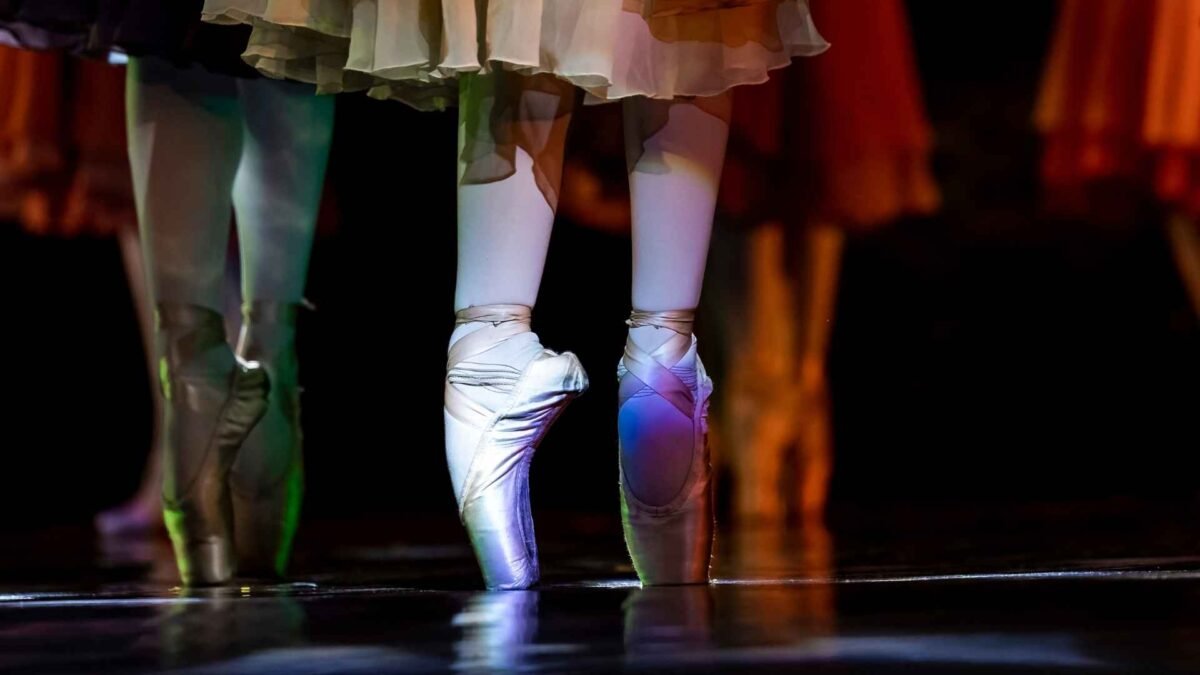
While dancers train extremely hard for these roles and focus on technique and performance, there is one special tool that helps them achieve this magical effect. This is the pointe shoe — a shoe made specially for the art of ballet, allowing dancers to completely have their weight and elevate themselves on the tips of their toes!
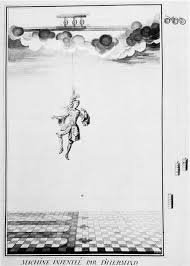
The machine was used to lift dancers on to pointe as well as right up into the air!
Before we look at how ballerinas are able to achieve such an impossible feat and what goes into making a pointe shoe, let us look at the history of pointe shoes in ballet and how this invention came into being.
Dancers of this art were constantly trying new methods and techniques to make their ballet look weightless and light. In an effort to achieve this, in 1795, Charles Didelot created an invention he liked to call the “flying machine.” In the simplest of terms, it was a rope and pulley system that would lift dancers up and allow them to stand on their toes.
The ethereal quality this machine gave to dancers soon became a crowd favourite, both amongst audiences and choreographers, who involved the machine in more and more dances and pushed the boundaries of ballet.
The machine was used to lift dancers onto pointe as well as right up into the air!
During ballet’s creation in the courts of Europe in the 15th and 16th centuries, dancers wore heeled shoes in line with the era’s aesthetic. However, in the 1730s, a ballerina by the name of Marie Camargo became the first to switch to soft-soled and unheeled ballet flats, giving her the ability to perform leaps and jumps.
In the 19th century, emphasis was placed on developing the technical skill required to rise en pointe without the aid of wires. Ballerinas wished to be able to rise onto their toes without the machine.
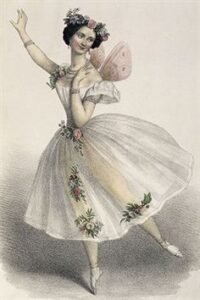
Marie Taglioni
Marie Taglioni was the first to achieve this feat when she danced La Sylphide en pointe, with simple ballet flats that had been darned at the sides and around the toes to give her extra support.
Later in the 19th century, Italian shoemakers developed reinforced pointe shoes with stiff boxes made from newspaper, flour paste and pasteboard. The shoes’ cardboard insoles were reinforced with leather to give more support to a dancer’s foot.
The Modern Pointe Shoe
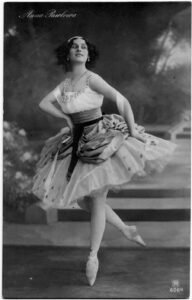
Anna Pavlova
The creation of the modern pointe shoe is credited to Anna Pavlova, a famous Russian ballerina of the early 20th century.
Pavlova had particularly high and arched insteps — the inner part of the foot between the ball of the big toe and the ankle — as well as slender, tapered feet. To compensate for this, she inserted toughened leather soles into her shoes for extra support and flattened and hardened the toe area to form a box, similar to the pointe shoes used in ballet today.
While in the 19th century pointe shoes had been used to differentiate fairies from mortals in ballets, in the 20th century, famous choreographers like George Balanchine tested the limits of how pointe shoes could be used to enhance their dances.
In recent years, scientific approaches to pointe shoe construction and training have helped the shoe adapt to contemporary choreographic demands. In 1993, Gaynor Minden launched a shoe inspired by the shock absorption found in athletic footwear, opening the door for other designers to experiment with modern materials to improve shoes’ durability and fit. There has also been emerging research in dance medicine to make pointe work safer.
Pointe Shoes and Inclusivity
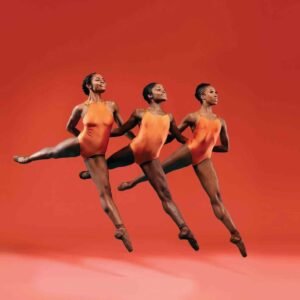
Rachel Neville / Dance Theatre of Harlem Dancers in frame: Alexandra Hutchinson, Ingrid Silva and Daphne Lee.
There has also been a historic change in the colour of pointe shoes, as well as in who can wear them.
In the early 1970s, Dance Theatre of Harlem began customising the company dancers’ tights, pointe shoes and ribbons in shades of brown to match their skin tones. This helped elongate the shape of ballerinas’ legs and allowed them to create beautiful lines while dancing.
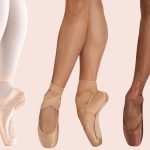
The effect was revolutionary for classical ballet. However, it was not until recently that pointe shoe manufacturers began releasing shades that reflect the diverse skin tones of the dancers wearing them.
Gaynor Minden released a collection of inclusive satin shades in 2017. The following year, Freed of London followed suit in collaboration with the London-based dance company Ballet Black.
While the change taking place may be taking time, it has opened up conversations on inclusivity and the diversity of this art form. Most importantly, redefining what a pointe shoe looks like breaks down a long-outdated construct and makes ballet more accessible and welcoming to all.
Similarly, in the past, male dancers only danced en pointe for comedic effect in roles like Bronislava Nijinska’s 1924 Les Fâcheux. But now we can see more male dancers attempting pointe work as a means of strengthening their art and making the shoe more accessible to people of all genders.
⸻
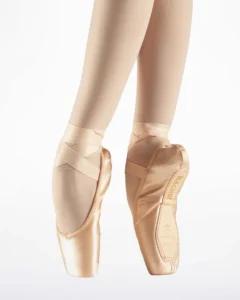
Pointe Shoes
The Parts of Pointe Shoes
1. The Platform
The flat end part of the shoe is referred to as the platform, which allows the dancer to balance and perform pointe work.
2. The Box
The box is the part of the shoe that encases the toes.
3. The Vamp
The vamp covers the top of the foot and the metatarsals, which are the bones in the foot that help dancers stand en pointe.
The vamp has an enclosed piece of circular drawstring elastic running around the whole shoe. This enables a dancer to increase the tightness of the shoe and prevents it from slipping off the back of the heel.
4. The Shank
The shank is the insole of the shoe. Some professional dancers modify their shoes by cutting off certain amounts of the shank close to the heel. This can increase the flexibility of the shoe and allow them to dance and point their feet better.
5. The Outer Sole
The outer sole is usually made from leather and is the part of the shoe that is in contact with the floor when the dancer is standing in a flat-foot position.
6. The Wings
The wings are the two symmetrical sides of the vamp, towards the platform.
7. The Ribbons
The ribbons help dancers secure the shoe to their foot correctly, ensuring that the shoe stays securely in place.
8. The Elastics
Elastics also hold the shoe in place. They are usually worn over the ankle, as in regular ballet flats, but some shoes may have a second elastic closer to the box. Sometimes the elastics may be crossed as well.




Leave a Reply