
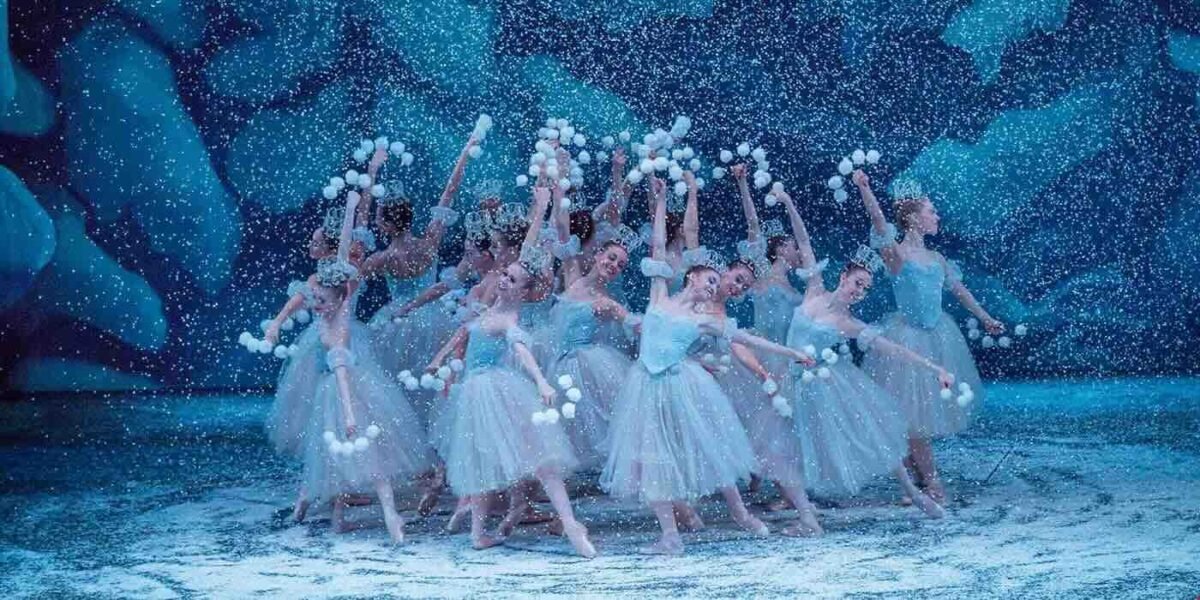
It is no surprise that if you’ve been associated with ballet in any capacity (or perhaps even movies that revolve around one specific doll: Barbie), you know about The Nutcracker. It is also no surprise that you know it as a ballet performed across the USA by most ballet companies from November to January, and sometimes even longer. But how did this ballet become what it is now? Who shaped it this way? And why is it performed so extensively?
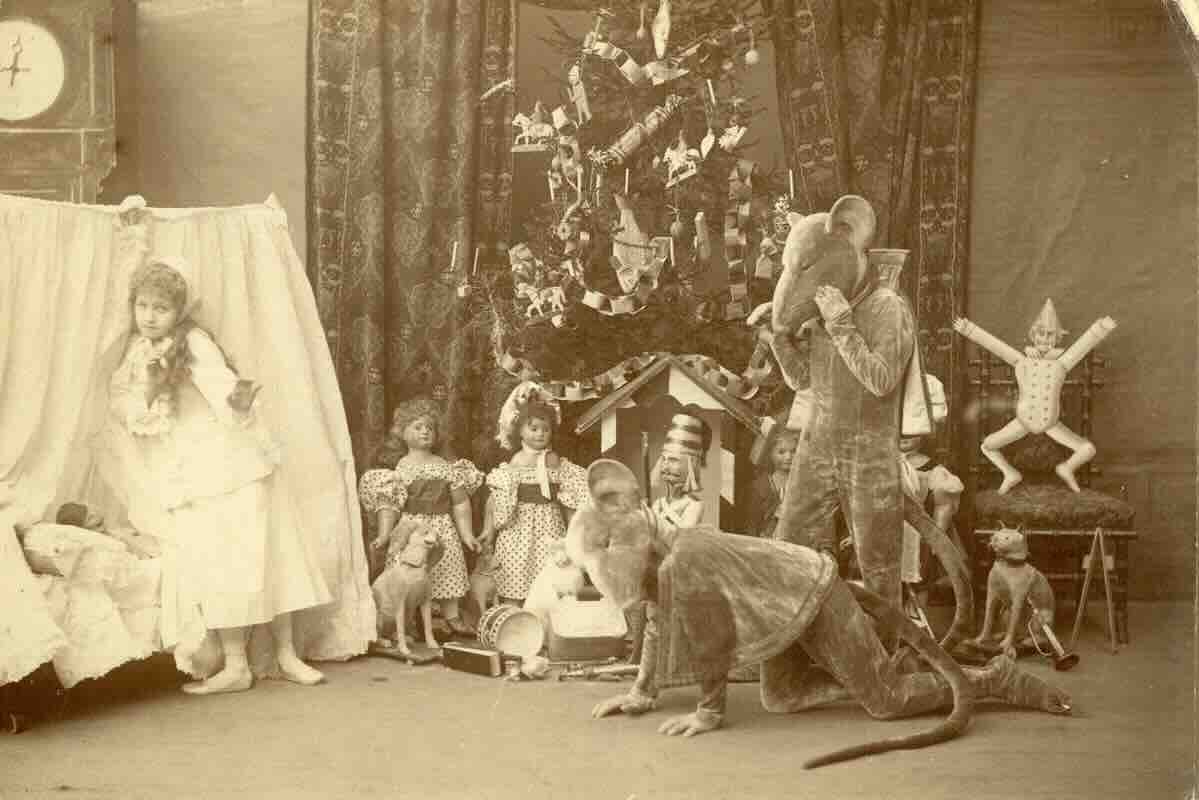
Stanislava Belinskaya as Clara and students of the Imperial Ballet School as mice (1892) Courtesy: Marius Petipa Society
It is common knowledge that the ballet’s premiere was deemed a failure. Choreographed by Marius Petipa but finished by Lev Ivanov, The Nutcracker failed to impress its early audiences. Even Tchaikovsky remarked, “In spite of all the sumptuousness, it did turn out to be rather boring,” and called it “infinitely worse than Sleeping Beauty.” Today, much of the credit for popularising the ballet goes to George Balanchine, who premiered his version with the New York City Ballet in 1954. So, what went wrong, and how did Balanchine change it?
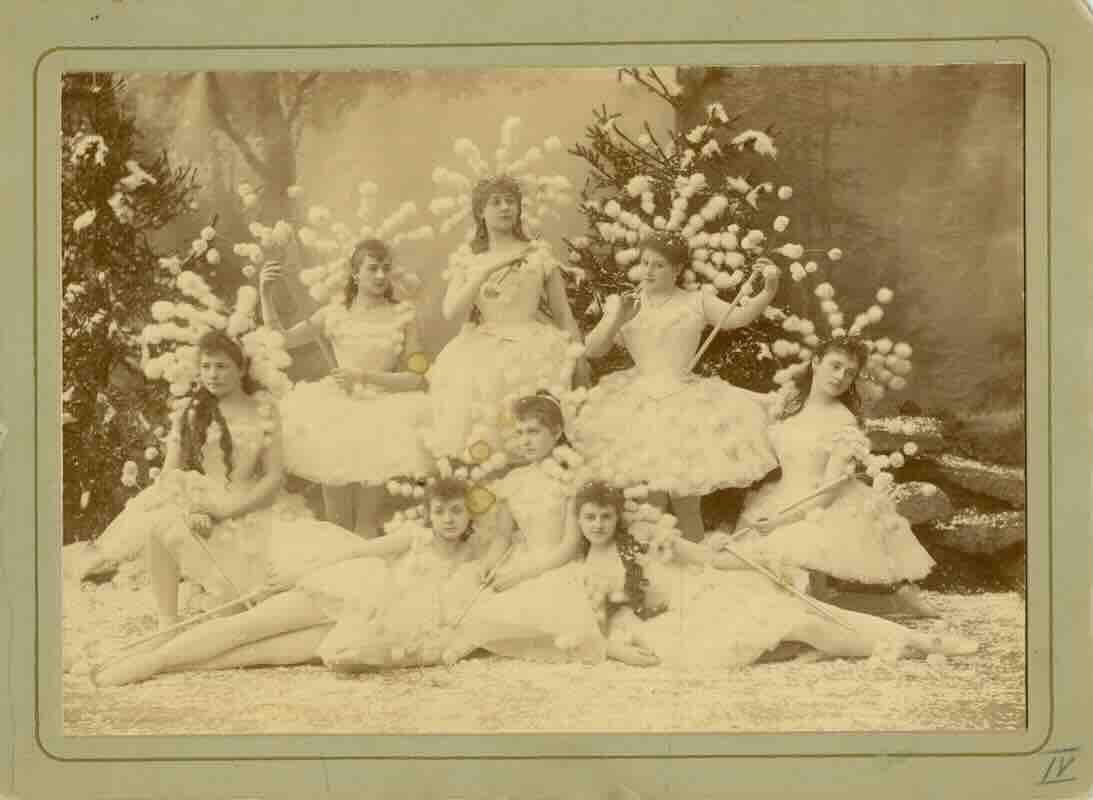
The Waltz of the Snowflakes (1892) Courtesy: Marius Petipa Society
During its run at the Imperial Mariinsky Theatre, audiences found the shift from the real world to the fantastical too abrupt, while others complained about waiting too long for the prima ballerina to appear. One critic called the battle between the toy soldiers and the mice amaterius, and that it was “disorderly pushing about from corner to corner.”. The staging, scenery, and costumes were labelled “tasteless” by some, and the then-innovative decision to cast children in children’s roles failed to win support. Amidst this, you’d be happy to know that the Waltz of the Snowflakes has been a fan favourite since it came to stage.
Balanchine, unsurprisingly, had danced in The Nutcracker himself as a student at the Imperial Ballet School. In his staging, he restored and refined several elements that had shifted over time: he cast children as Clara and Fritz, portrayed the Nutcracker as Drosselmeyer’s nephew, removed the Cavalier’s variation, began Act II with the Sugar Plum Fairy’s variation, and altered the ending so Clara returns from the Land of Sweets in a sleigh. Clara is also named Marie, aligning the ballet more closely with E. T. A. Hoffmann’s original story.

George Balanchine’s The Nutcracker © 2014 Paul Kolnik
From there, the success of Balanchine’s Nutcracker spread across the United States and beyond. This also explains why the USA, more than other countries, treats it as a major cultural tradition. In 2010, dance critic Alastair Macaulay documented his travels across the country, watching over twenty productions of the ballet. Following Balanchine, many choreographers created their own versions, realising that The Nutcracker reliably drew the largest audiences and families to the ballet, helping draw major funds for the
George Balanchine’s The Nutcracker © 2016 Paul Kolnik
companies. Its spectacular theatricality like the growing Christmas tree in productions also made it irresistible to children!
Although outside the USA, The Nutcracker does not drive a season entirely, it goes without saying that popular culture shaped by the United States has had a far-reaching influence. I leave it to you, the reader, to consider how you first came to know The Nutcracker and understand where it truly began.
References:






Leave a Reply